


Interest in relationships between women is not confined to adult content. It appears in art, film, stories and the ways people imagine closeness. One viewer’s reason for liking a scene may differ from another’s. A useful discussion distinguishes real relationships, fictional representation and the categories used by a platform.

Intimacy in art and film
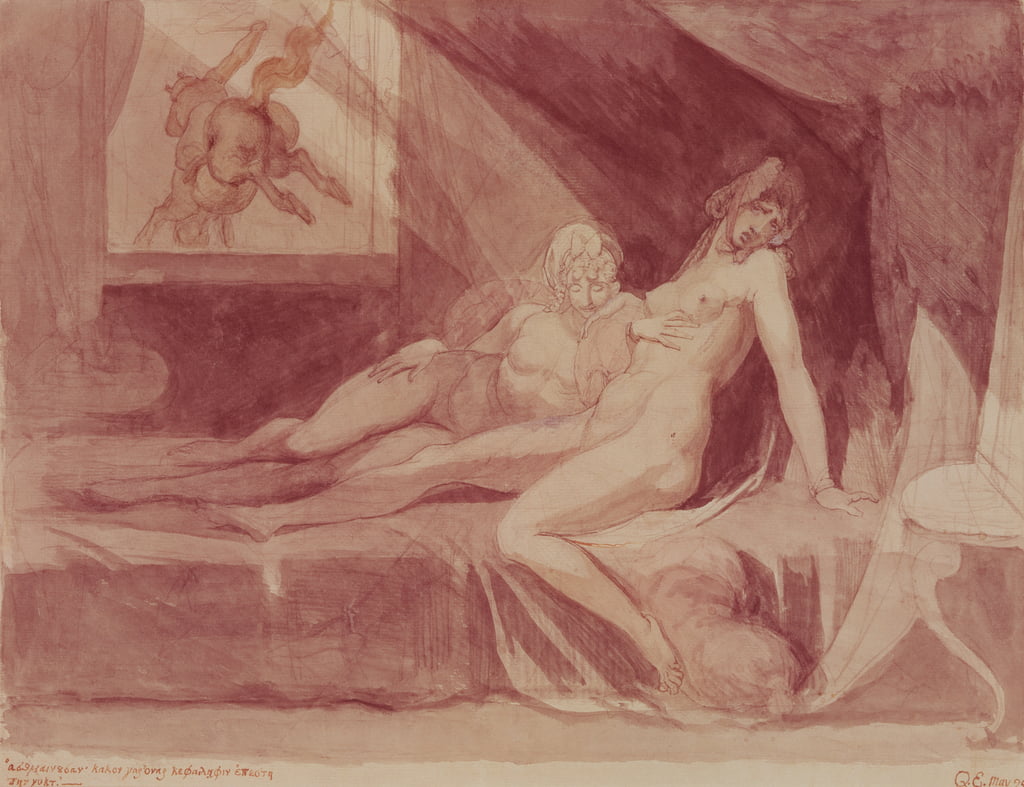
The gallery retained from the original article shows different artistic depictions of two women. A look, physical closeness or a mythological setting can invite several interpretations. Two female figures do not automatically establish a particular identity or relationship. Meaning also depends on the work’s story, historical setting and the viewer’s perspective.
In Morocco (1930), Marlene Dietrich wears a masculine-style suit and kisses a woman in the audience of her performance. The scene illustrates how costume and gesture can play with expectations about gender on screen. BFI’s discussion of Dietrich provides context.
The original article also highlighted the dance in Frida. Movement, looks and relationships between characters can convey intimacy without an explicit scene. A viewer’s impression of chemistry between performers is an interpretation of a performance, not evidence about their private lives.





Why some men are interested
Some of the comments discussed in the original article mentioned attraction to the women on screen. Others connected the appeal to personal fantasy or curiosity about something considered taboo. Those comments can describe individual preferences, but they do not represent all men.
A viewer may also respond to visual style, pacing or the depiction of closeness. There is no need to assume that everyone imagines the same role in a scene. Claims about competition between men or biological ownership of partners remain unsupported opinions in those comments, not scientific explanations.

Why some women are interested
The original discussion emphasised touch, emotional connection and attention to women’s experiences. Some viewers may find those elements engaging, but they are neither exclusive to women nor present in every scene involving two women. Production choices and individual preferences also matter.
A person’s viewing choice does not by itself determine their sexual orientation. Fantasy, physiological response, behaviour and the identity someone uses are related questions, not interchangeable measurements. A study discussed through the University of Essex repository concerns measured responses under particular conditions; it should not be turned into a claim about the identity of every woman.
What popularity figures tell us
The original article referred to Pornhub statistics for 2019 and a Marie Claire survey. Those references concern a particular period, platform or sample. They cannot establish today’s ranking or explain the preferences of all viewers. The former statement that 2020 and 2021 statistics had not yet been published is no longer presented as current information.
Platform categories also organise material for a service. They are not a complete account of the lives or relationships of the people represented. Popularity within a category does not prove a single psychological reason for watching it.
Fantasy is not a biography
A person may like a fictional scenario without wanting it in their own life, or recognise something meaningful in a story without adopting a new identity. It is more useful to ask what a particular person thinks than to infer their motives from a viewing category. Generalisations such as men being uniformly more visually responsive than women go beyond what this article establishes.
The original gallery and media are retained as examples of representation. They are not a representative sample of relationships between women and should not be treated as evidence for a universal preference.
Talking about preferences
If a scene prompts a conversation with a partner, start with what each person likes about it and leave room for a different response. Enjoying the same work is not a requirement for closeness. For practical discussion of expectations online, see the service comparison and eight chat tips.
The Yareel references in the original article concerned a past update. Current options depend on the version and catalogue available to the player; the official download page distinguishes the available clients. Virtual scenes are another form of representation, not a definition of anyone’s identity.